How to set up proxy on iOS: step-by-step instructions

A proxy server acts as an intermediary between your device and the website you want to reach. The destination sees the proxy IP instead of yours, and your apparent location changes accordingly. For managing multiple accounts, accessing region-locked services, or keeping work sessions separated by IP, a proxy on a mobile device is a basic requirement. But iOS handles proxy configuration with a few limitations that are easy to miss, and skipping them leads to IP leaks, broken sessions, and flagged accounts. This guide covers both the built-in method and third-party apps, with the trade-offs between them.
What iOS can and cannot do with proxies
The built-in proxy configuration on iOS only covers Wi-Fi connections and supports HTTP/HTTPS protocols. There is no native SOCKS5 support, and no proxy field exists for cellular data. As AIMultiple notes, cellular connections are governed by APN settings controlled by the carrier, and Apple does not expose a proxy option there. When the device switches from Wi-Fi to LTE or 5G automatically, traffic bypasses the proxy entirely.
This is worth understanding before you spend time on setup. iOS was designed for regular consumers, not for people who need granular network control. The proxy settings reflect that. They work, but within narrow boundaries.
Each Wi-Fi network requires its own proxy configuration. If you set up a proxy for your home network, it will not carry over to your office or a coffee shop. iOS offers three modes in the HTTP Proxy section: Off, Manual, and Auto (PAC file). Manual is the most common choice for individual users. Auto is typically used in corporate environments managed through MDM profiles, where a PAC file defines routing rules for different domains.
Native iOS settings vs. third-party proxy apps
Feature | Native iOS settings | Third-party apps |
|---|---|---|
Protocols | HTTP, HTTPS only | HTTP, HTTPS, SOCKS5, Shadowsocks, VMess |
Wi-Fi traffic | Yes (per network) | Yes (all networks) |
Cellular traffic | No | Yes |
Per-app routing | No | Yes (rule-based) |
Authentication | Username / password | Username / password |
DNS leak protection | No (system DNS) | Yes (configurable) |
Cost | Free (built-in) | Free to $2.99 |
Setup time | ~2 minutes | ~5 minutes |
Configuring a proxy on iOS (Wi-Fi settings)
Before setting up proxies, you need to purchase them. You can buy a high-quality US proxy on our website by placing an order in your personal account. After payment, you will receive the proxy server address, port, and if applicable, a username and password.
These instructions are verified on iOS 26, which runs on 85% of active devices as of July 2026. The interface is identical on iOS 18. Follow these steps:
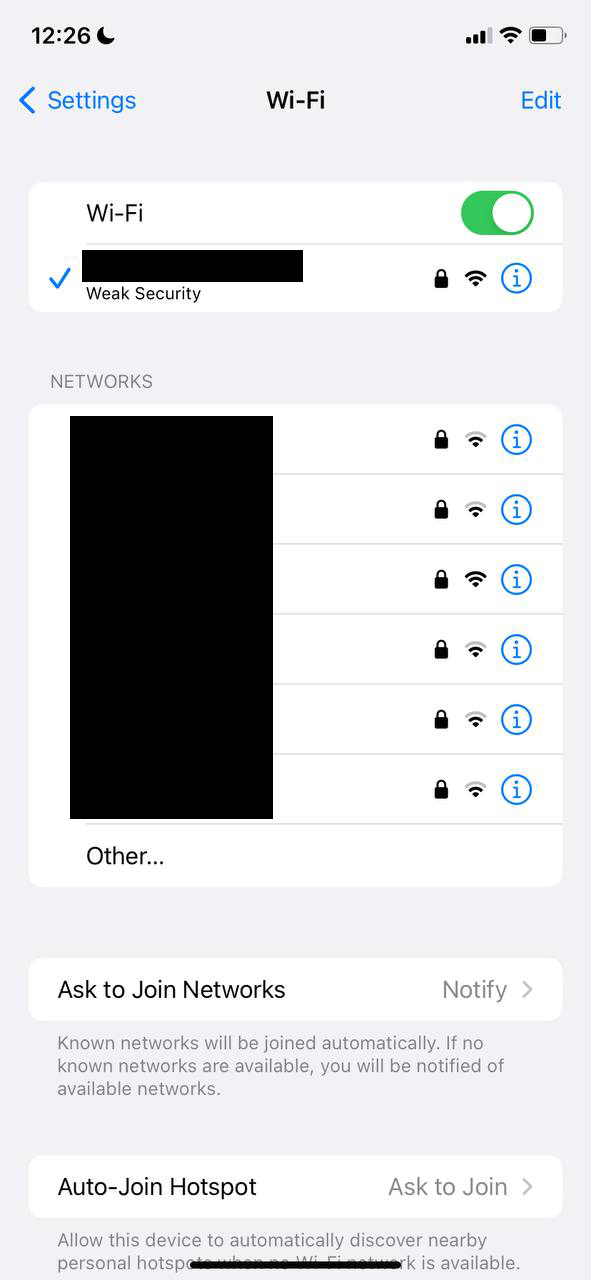
- Open Settings, then tap Wi-Fi.
- Find the network you are connected to (marked with a blue checkmark). Tap the round (i) info icon to the right of the network name.
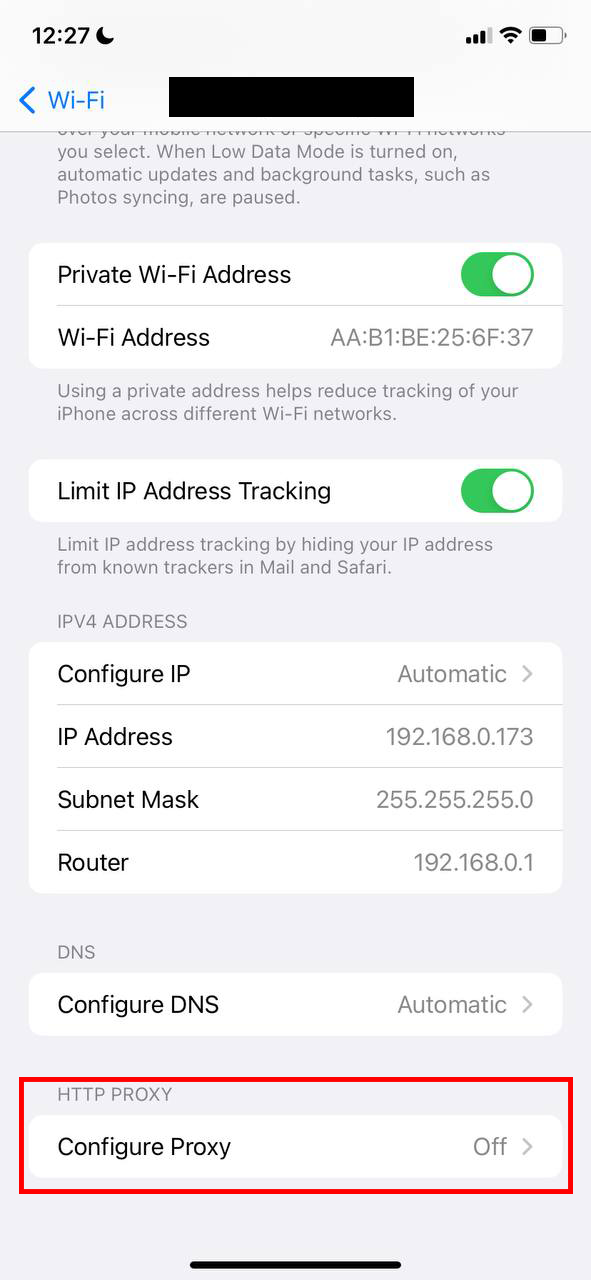
- Scroll down to the bottom of the network details page and tap Configure Proxy (listed under the HTTP Proxy section).
- Select Manual.
- Enter the proxy IP address in the Server field and the port number in the Port field.
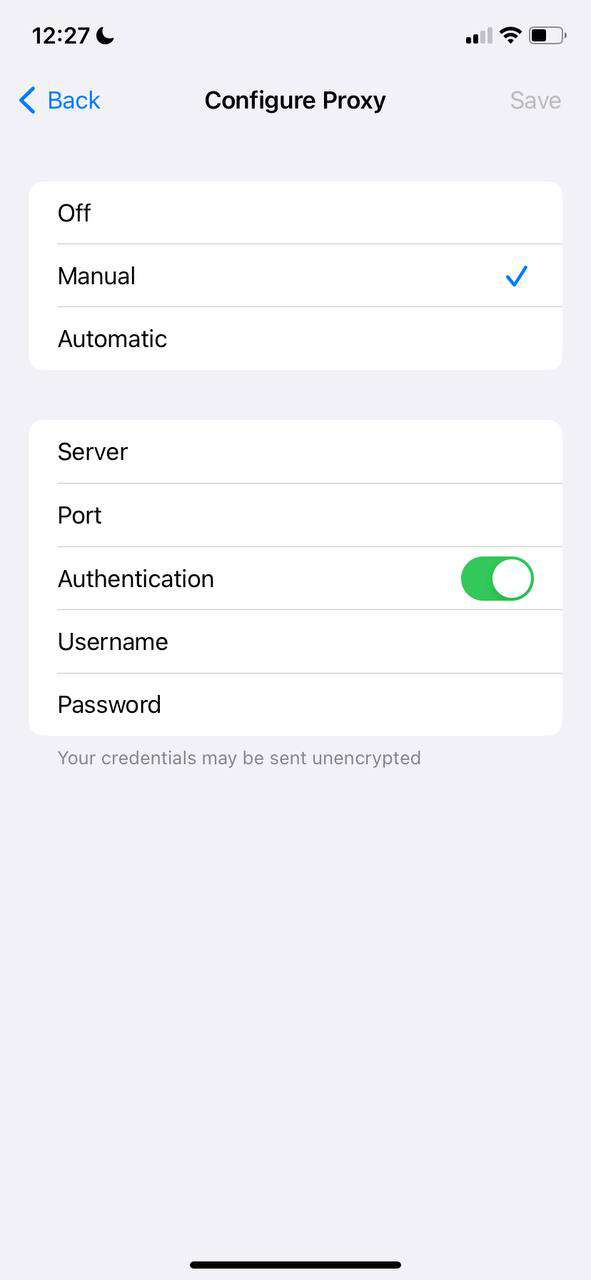
- If your proxy requires authentication, toggle Authentication on and enter the username and password in the corresponding fields.
- Tap Save or navigate back. iOS saves the settings automatically.
After these steps, check the proxy by opening Safari and visiting any IP-checking service. A quick way: just google "what is my IP" directly in Safari. Takes five seconds and saves you the headache of debugging later. The displayed IP should match your proxy server, not your real address.
Limitations of the native method
The Wi-Fi proxy setting covers only the specific network you configured. Switch to another Wi-Fi and you are back on your real IP. Switch to cellular data and the same happens. Some apps with custom networking stacks or those using the QUIC protocol may bypass the system proxy entirely, as Byteful documents. Always verify your IP inside the actual app you plan to use, not just in Safari.
And here is the one that catches people off guard. Wi-Fi Assist, enabled by default (Settings > Cellular > scroll all the way to the bottom), automatically routes traffic through cellular data when Wi-Fi signal is weak. Most people do not even know this setting exists. If your proxy is configured only through Wi-Fi settings, Wi-Fi Assist can silently expose your real IP during poor connectivity. We have seen this cause account flags that took days to sort out. For proxy-dependent workflows, disable it.
Configuring proxy on iOS using Potatso Lite
The native proxy settings do not support SOCKS5 and cannot route cellular traffic through a proxy. Third-party apps solve both problems by using Apple Network Extension framework, which creates a local VPN tunnel on the device. The app routes all traffic, both Wi-Fi and cellular, through your proxy server inside that tunnel. A VPN icon will appear in the status bar, but no external VPN service is involved.
Potatso Lite is a free proxy client available in the App Store. It supports HTTP, HTTPS, SOCKS5, and Shadowsocks protocols. One thing to note: depending on your App Store region, Potatso may show up under a slightly different listing or not appear at all. If that happens, search for "Potatso" rather than the full name.
To set up a proxy in Potatso Lite, follow these steps:
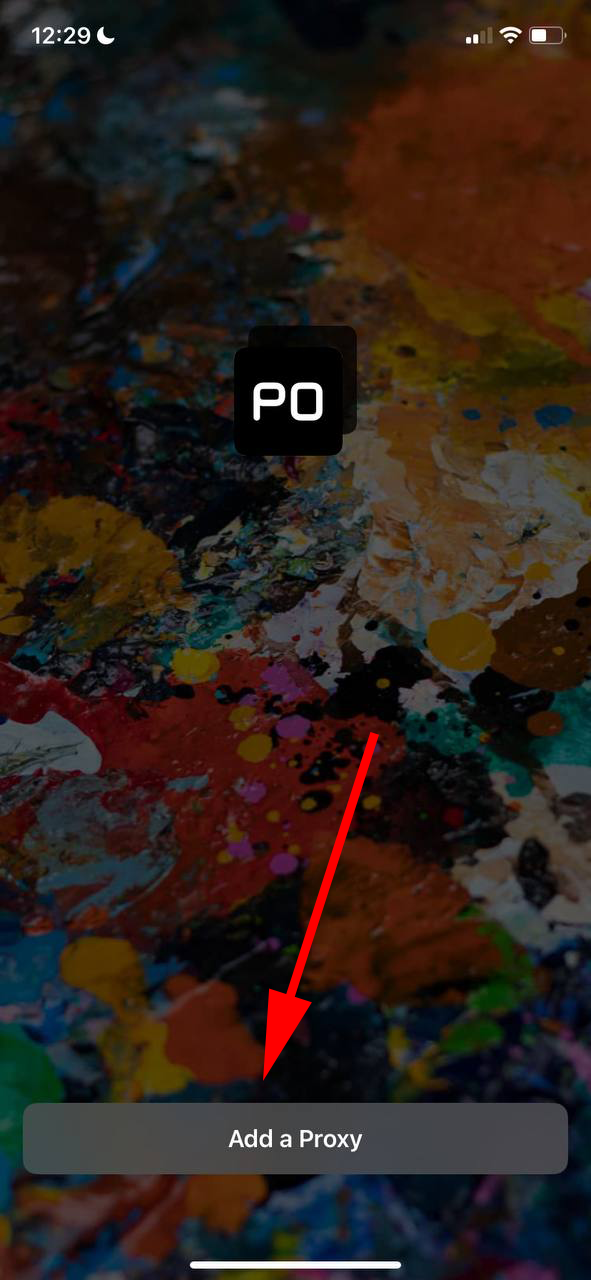
- Open Potatso Lite and tap the Add a Proxy button.
- Select the proxy protocol, in the type field, s. Choose HTTP for HTTP/HTTPS proxies, or Socks5 if your proxy uses the SOCKS5 protocol.
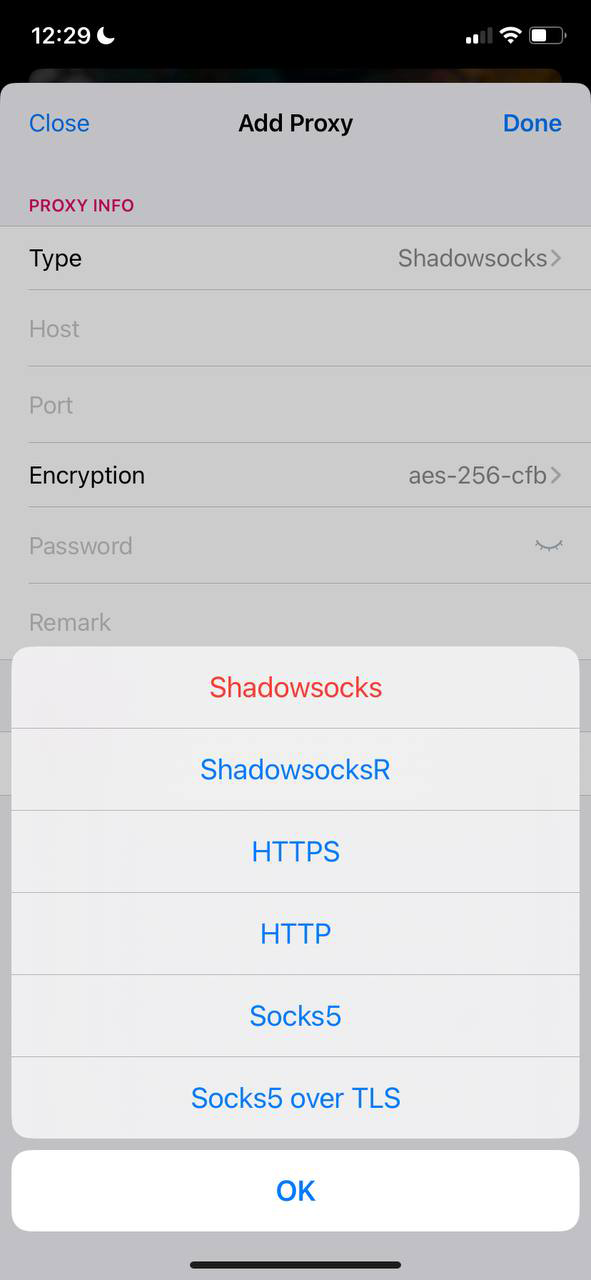
- Enter the proxy IP address in the Host field,. In the Port field, enter the port number.
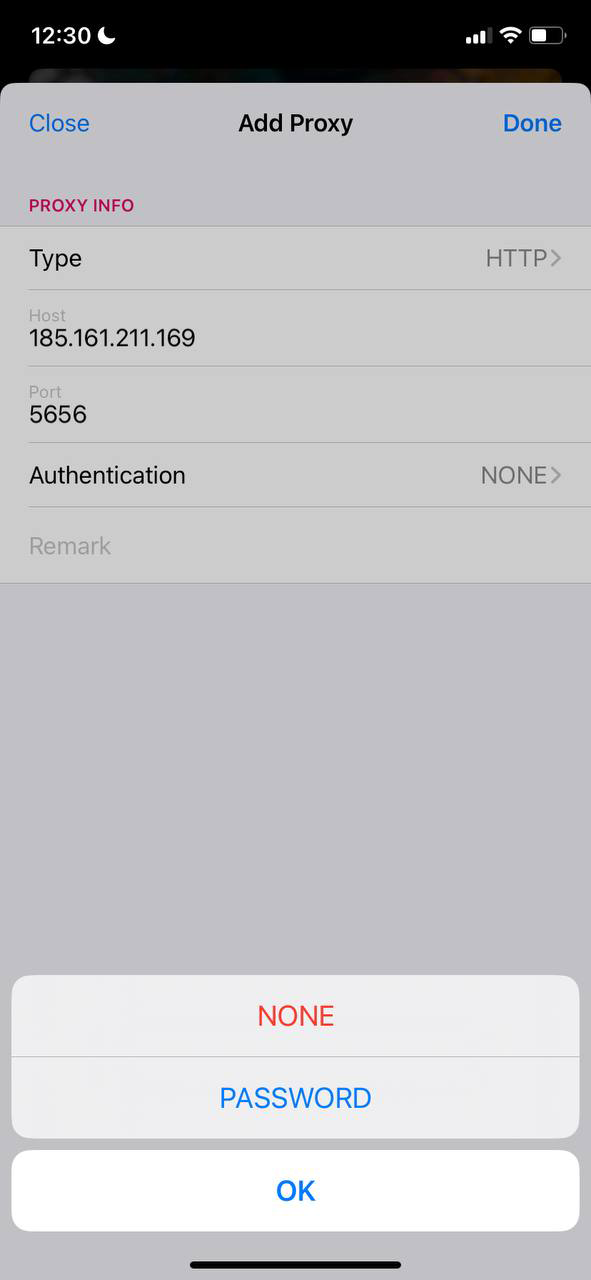
- If the proxy requires login credentials, set the Authentication field to Password, then fill in the User and Password fields.
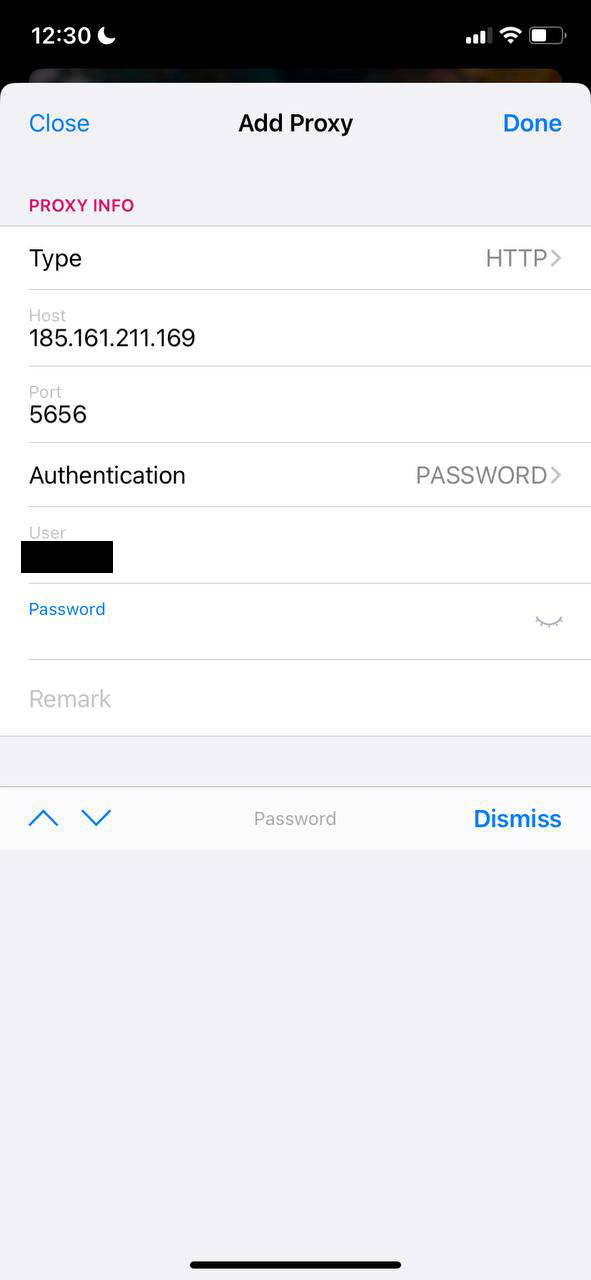
- Tap Done.
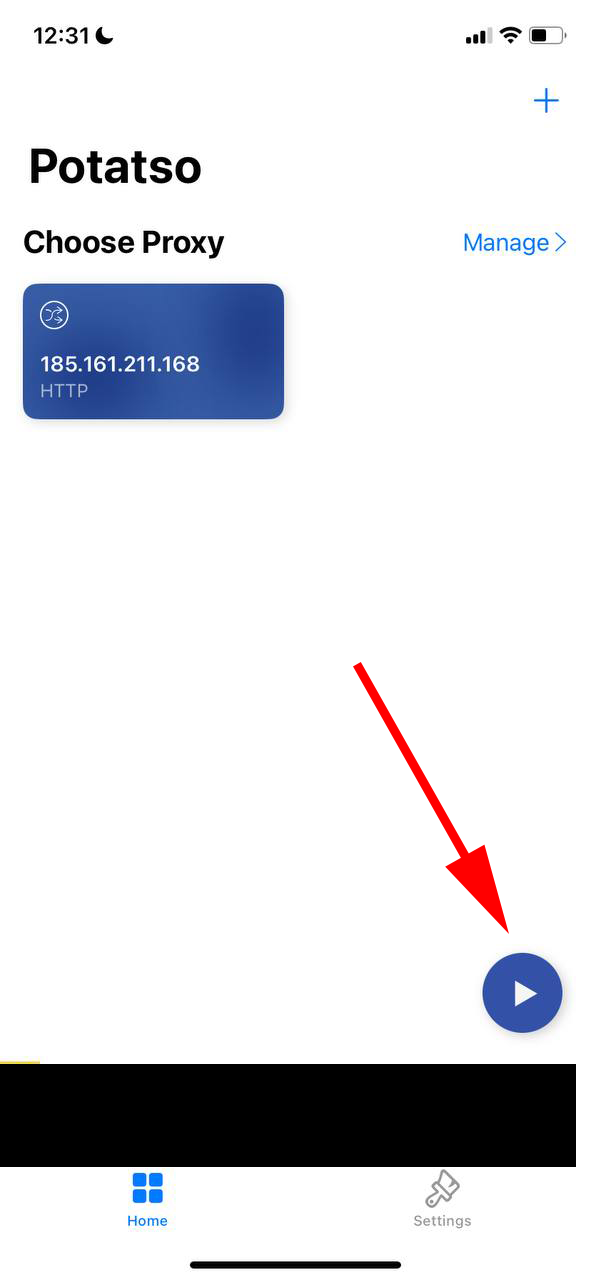
- Select the proxy from the list and tap the blue enable button in the lower right corner.
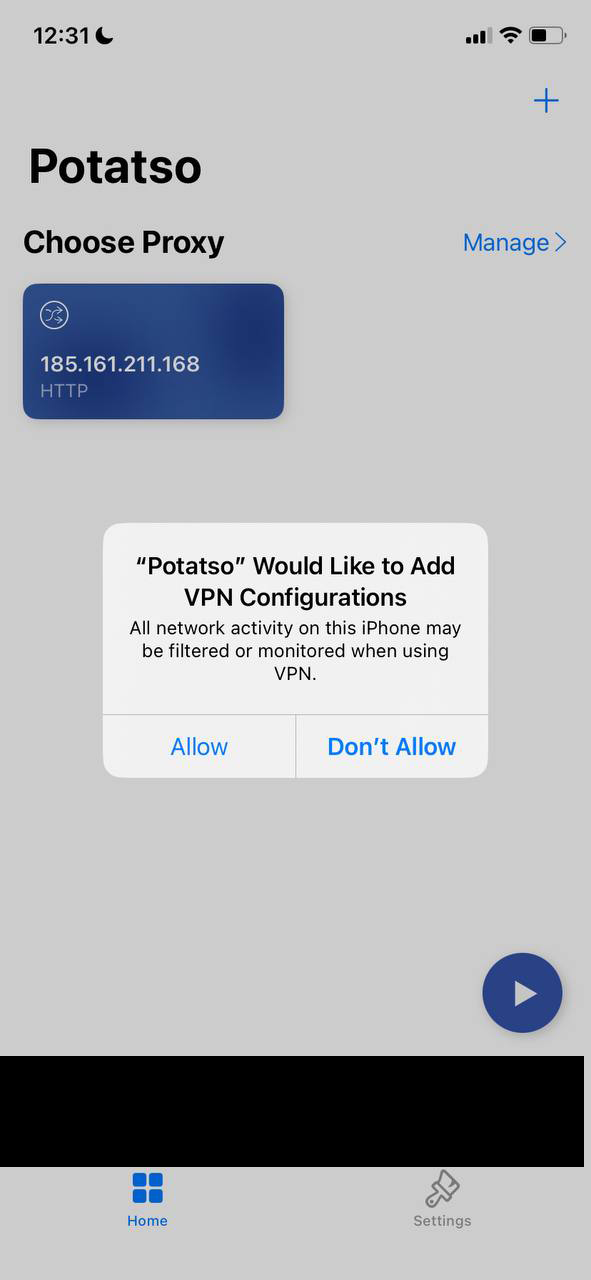
When the proxy is first launched, iOS will ask you to allow a VPN configuration. Tap Allow and confirm with Face ID or your passcode. This is standard behavior: the app creates a local tunnel, not a third-party VPN connection.
A note on stability
Potatso Lite is free, and that is both its strength and its problem. Users on BlackHatWorld report disconnections after just a few minutes of use. One user described uploading a video through a proxy and having Potatso drop the VPN connection mid-upload, exposing their real network. That is exactly the kind of failure you do not want during an account warm-up session.
If stability matters, Shadowrocket ($2.99, one-time purchase) is the safer bet. It supports the same protocols plus VMess, VLESS, and Trojan, offers rule-based per-app routing, and holds connections for hours without dropping. Three dollars for a tool you will rely on daily is not really a trade-off. Both apps work with any proxy provider, including Proxys.io.
Common mistakes when using proxies on iOS
Not verifying the IP after setup. Configuring a proxy does not guarantee all traffic goes through it. After setup, open an IP-checking service in Safari (for native settings) or inside the VPN tunnel (for third-party apps). If the displayed IP matches your real address, the proxy is not active or the app is bypassing it. This sounds obvious, but about half of the troubleshooting tickets we see come down to exactly this step being skipped.
Using the same proxy IP on desktop and mobile simultaneously. If an anti-detect browser on your computer and your mobile device share the same proxy, platforms may detect parallel sessions with different fingerprints but an identical IP. For multi-account workflows, each device and each account should use a separate IP address.
Ignoring DNS leaks. Even when HTTP traffic routes through the proxy, DNS queries may still go through your ISP DNS server. The result: your proxy IP says Germany, but DNS queries resolve through a Russian provider. Platforms detect this mismatch. Third-party apps like Shadowrocket allow DNS routing through the proxy tunnel, but this must be configured separately. It is not on by default, which is easy to miss.
Why iCloud Private Relay is not a proxy replacement
Apple iCloud Private Relay, available to iCloud+ subscribers, routes Safari traffic through a two-hop architecture: one relay sees your IP but not the destination, the other sees the destination but not your IP. It protects Safari browsing only. It does not cover other apps, does not allow choosing a specific country or city, and does not support authentication or custom servers. For anything beyond casual browsing privacy, it is the wrong tool.
The timing here is worth noting. In August 2026, just days before this article was updated, security researchers at Mysk discovered three WebKit mechanisms (DNS prefetching, favicon requests, and HSTS cache) that bypass Private Relay and expose the real IP address. Both The Hacker News and Malwarebytes covered the findings. Apple confirmed it is investigating. This is not the first time Private Relay has had IP-leak issues . A similar WebRTC-based leak was found back when the feature first launched in 2021. For tasks where IP masking must actually hold up, a dedicated proxy server is still the only reliable option on iOS.
When native proxy settings are enough
Not every task requires a third-party app. The built-in Manual proxy configuration is sufficient if three conditions are met: you work exclusively over Wi-Fi without switching to cellular, your proxy uses HTTP or HTTPS (not SOCKS5), and you only need proxy coverage for apps that respect system-level network settings (Safari, most browsers, standard productivity apps). For multi-account management, social media automation, and data collection, where IP consistency and full device coverage matter, a third-party proxy client is the more reliable choice.
If you experience any issues with proxy configuration or connectivity, contact Proxys.io technical support. The team is available 24/7 and can help troubleshoot setup problems on any iOS version.