Setting up a proxy in Firefox

If you want to change the IP address websites see when you browse in Firefox, you can configure a proxy in the browser settings or use the ProxyControl extension. A proxy provides a different public IP address; Private Browsing does not.
In Firefox 152 and later, proxy settings sit under Settings > Privacy and security > Connection and software security > Advanced settings > Configure proxy, not on the General page that most older guides describe. According to StatCounter's September 2026 browser version data, Firefox 155 and 156 alone accounted for 3.27 percentage points of Firefox's roughly 6.1% worldwide desktop share, so most Firefox users already see the new layout. A proxy changes the IP address that websites see, which Private Browsing does not: Mozilla's support article on private browsing myths states, “It doesn't hide your IP address or your location.”
Firefox keeps its own proxy settings, separate from Windows, macOS and Linux. Out of the box it uses "Use system proxy settings" and follows the operating system, but after you switch to manual configuration only Firefox traffic goes through the proxy, while system updates, messengers and other apps keep the direct connection. Each Firefox profile, listed at about:profiles, stores its own proxy configuration, so one computer can run a work profile on a fixed IP next to a personal profile without a proxy. Marketing and QA teams use this to check localized search results, ad placements and regional versions of their own websites.
What is a proxy server?
A proxy server is an intermediary between the client’s computer and the Internet world network. Websites see the proxy’s IP address instead of yours, while the proxy sees which sites you open. For https:// pages it receives only the domain name and port, and the page content passes through encrypted, so the proxy cannot read what you type or download.
In 2026 a proxy rarely makes Firefox faster. The old promise of pages loading up to 30 times faster through a proxy on a local network relied on caching plain HTTP pages, but Mozilla engineers Oskar Mansfeld and Max Inden reported at IETF 126 in July 2026 that about 89% of Firefox desktop page loads now use HTTPS. A proxy cannot cache encrypted pages without decrypting them, so it adds a network hop instead of saving one. Page speed through a proxy depends on the server’s location and bandwidth, so pick a proxy close to the sites you work with.
How to set up a proxy connection?
In order to connect proxy, you need to follow this algorithm:
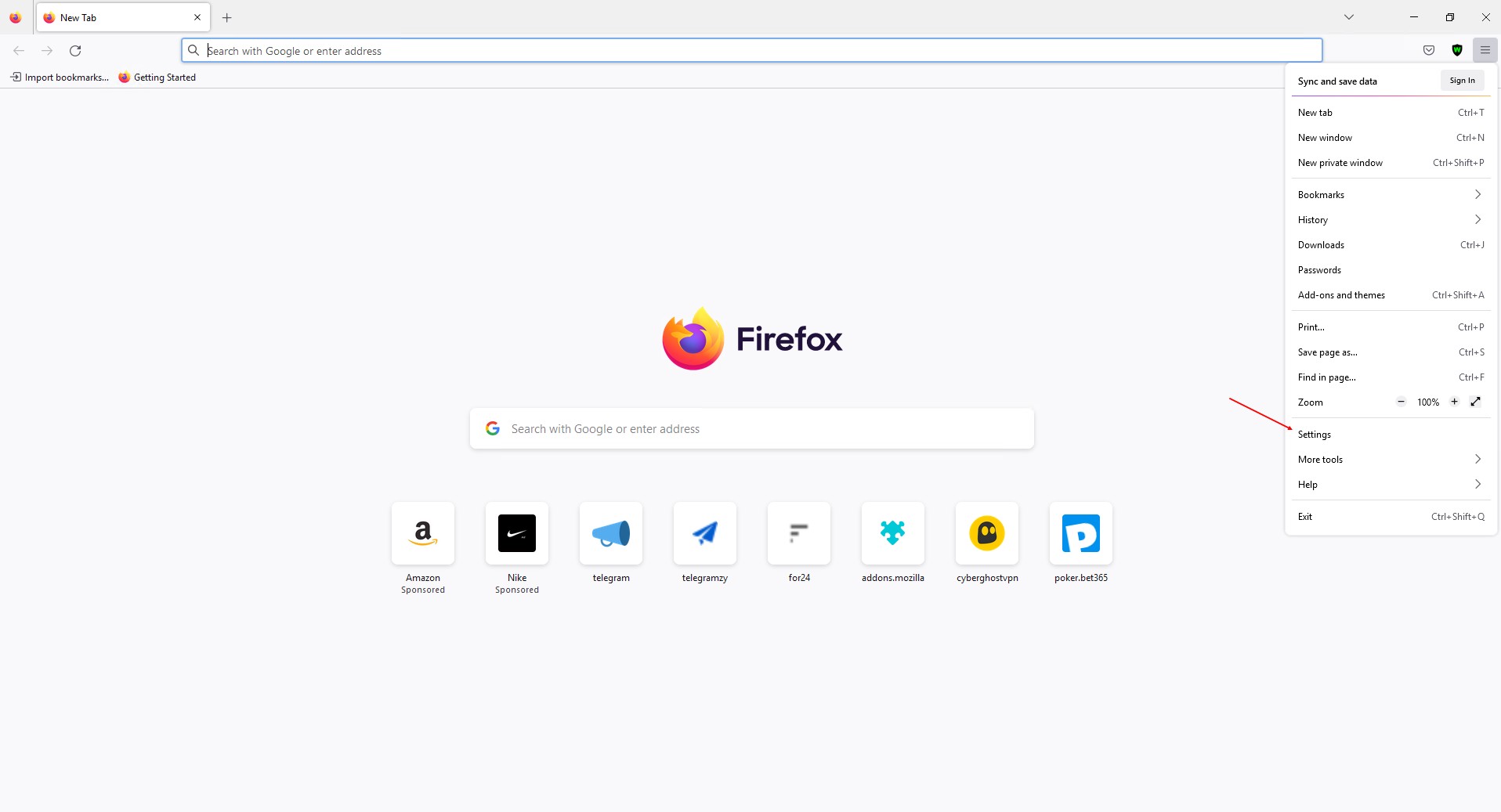
- Click on the three horizontal bars at the top to expand the browser menu, and select "Settings" in it.
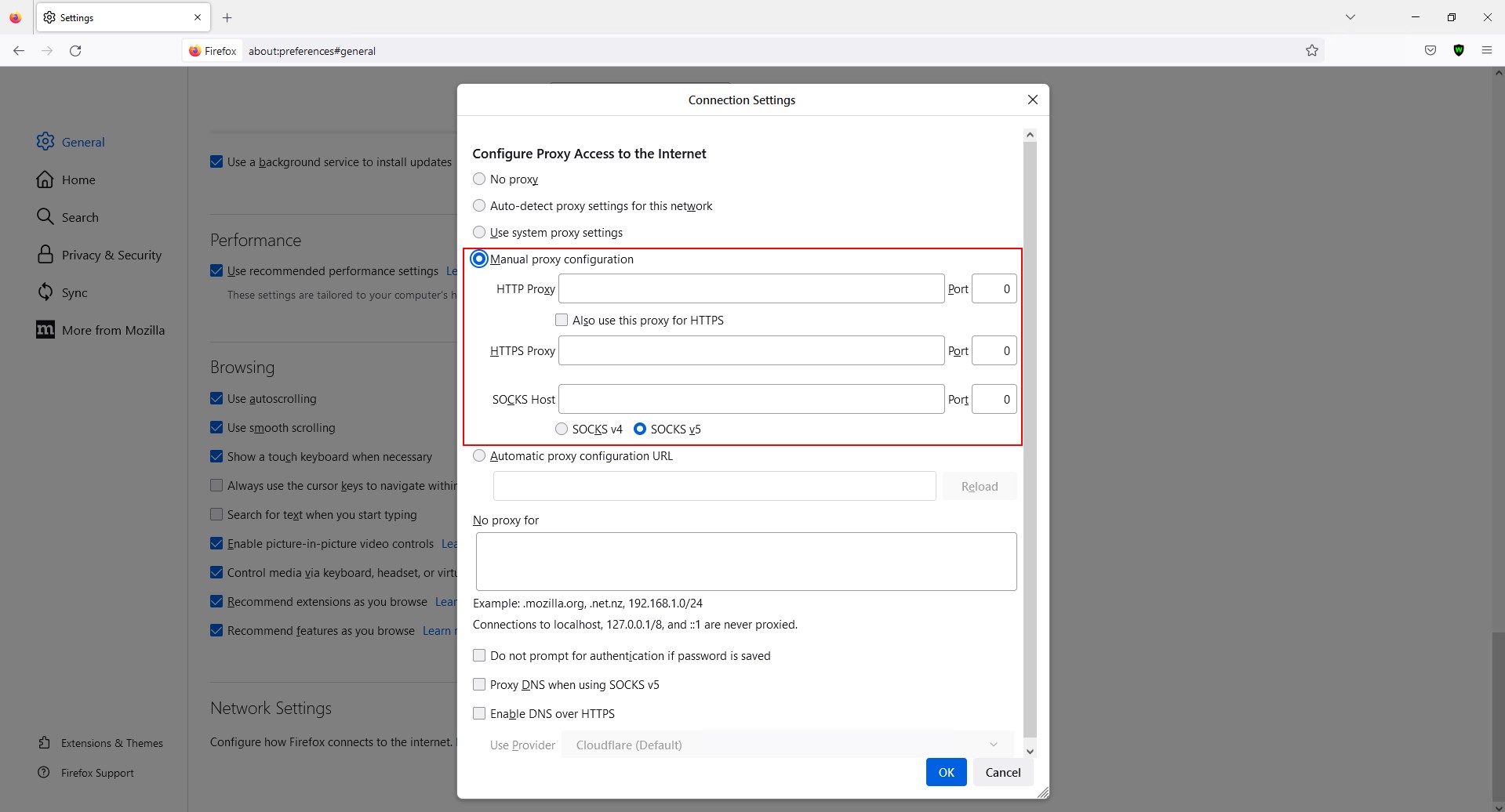
- Open "Privacy and security", find the "Connection and software security" section, click "Advanced settings" and then "Configure proxy" in the "Proxy settings" block. In Firefox 151 and earlier, including ESR 140, the "Network Settings" section with the "Settings…" button is still at the bottom of the General page.

- Select "Manual proxy configuration" and in the appropriate fields next to the desired protocol, enter the IP and port number of the server. The proxy provider will tell you the protocol type along with the data. If you have several protocols, you need to specify the information separately for each one, as they will differ. The exception is the HTTP and HTTPS protocols, their data may match. In this case, it is not necessary to duplicate them, it is enough to write them down for HTTP and tick the box "Also use this proxy for HTTPS". Do not skip this box: in our test with a logging proxy, Firefox opened HTTPS sites directly, bypassing the proxy, when only the HTTP field was filled in. For the SOCKS protocol, you need to select its type under the line for IP recording (check this type with the checkbox).
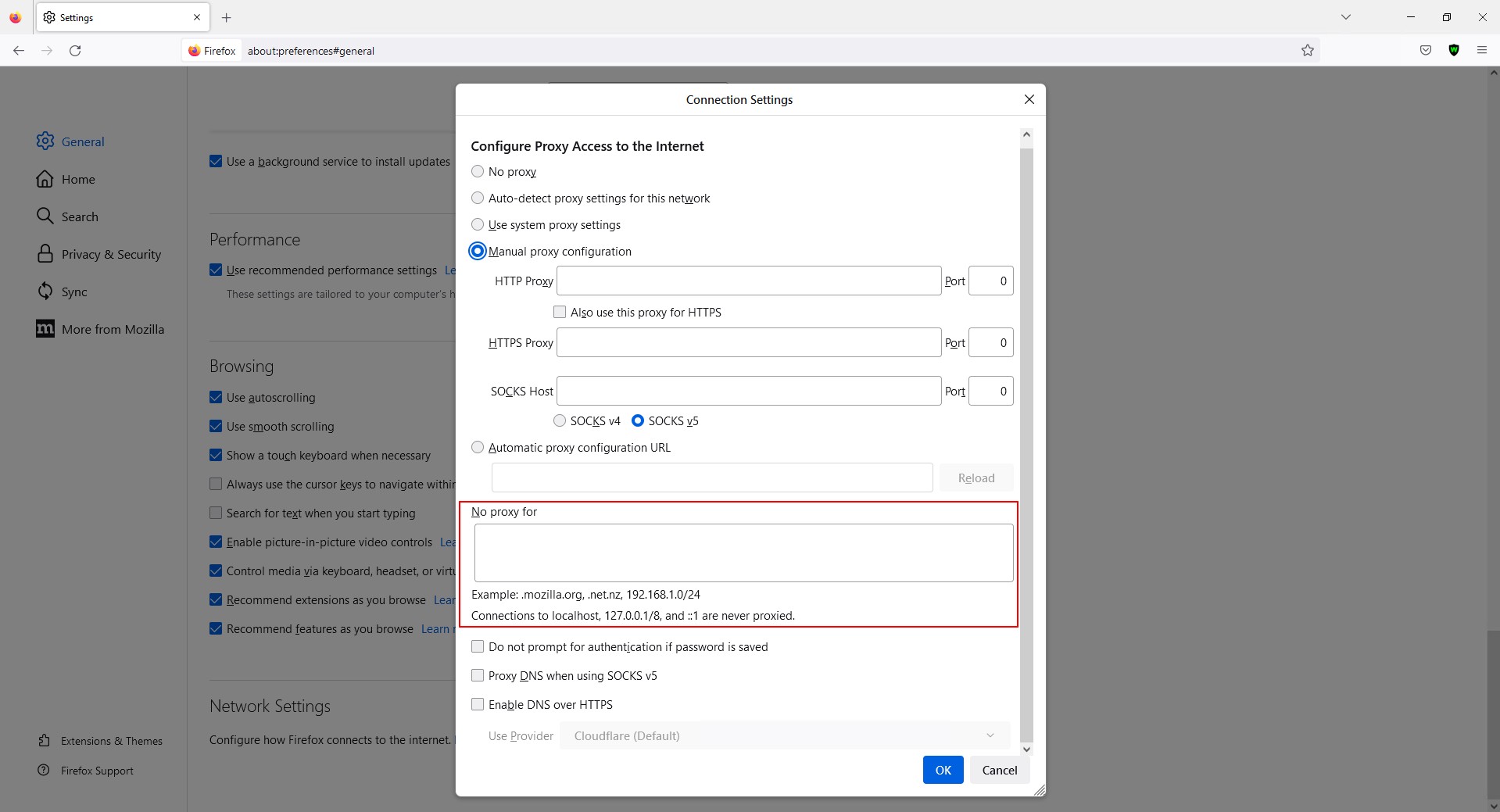
- If necessary, you can configure additional parameters: specify the addresses of web resources that you need to visit without a proxy server, confirm the refusal to re-request the proxy login and password by checking the box next to the corresponding item. After installing additional settings, click "OK". If you do not need to configure any additional parameters, you can immediately click "OK".
Firefox’s built-in settings cannot use a SOCKS5 proxy that requires a login and password, because the Connection Settings window has no fields for SOCKS credentials. In our test, Firefox offered such a server only the "no authentication" method and then showed "Unable to connect" without mentioning the proxy. The request to add these fields, Mozilla bug 122752, has been open since 2002 and remained open in October 2026.
With PROXYS.IO, switch the proxy to authorization by IP address in your personal account or connect the same proxy over HTTP and HTTPS, which every PROXYS.IO proxy type supports.
Setting up proxy via a browser extension
For switching between several proxies, you can use our extension ProxyControl: it stores a list of HTTP and HTTPS proxies, with or without a login and password, and switches between them from the toolbar. This is an adaptive extension that is suitable for different browsers, and therefore is available in their add-on stores. So, the setup algorithm is as follows:
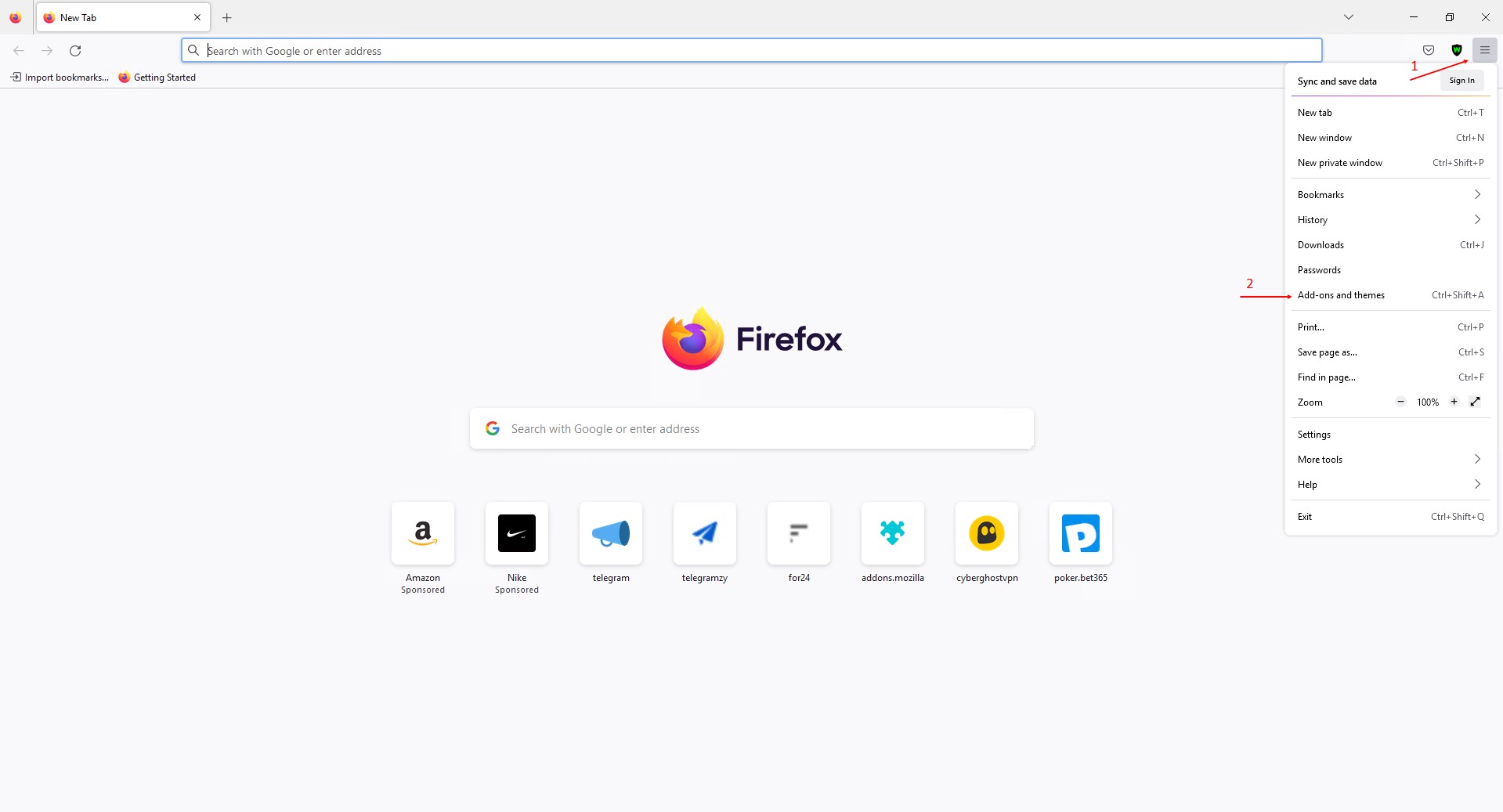
- First you need to find and install the extension. To do this, you need to open the browser menu (click on the three horizontal bars in the upper right corner) and select the "Extensions and Themes" section.
- In the search bar at the top, write "ProxyControl" and click on the magnifying glass or the "Enter" button on the keyboard.
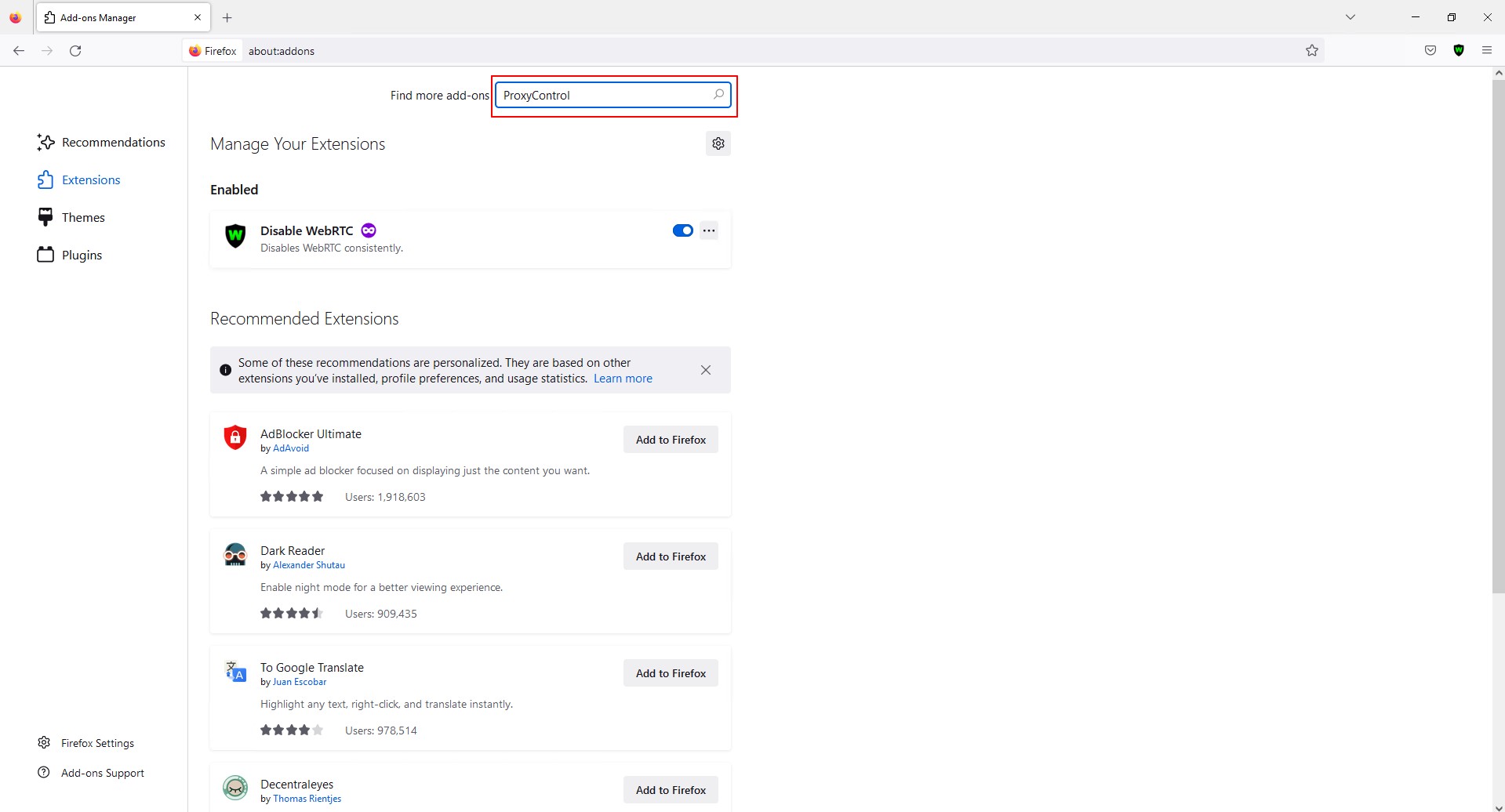
- In the search results list, click on the name of the extension we need and on the next page click "Add to Firefox".
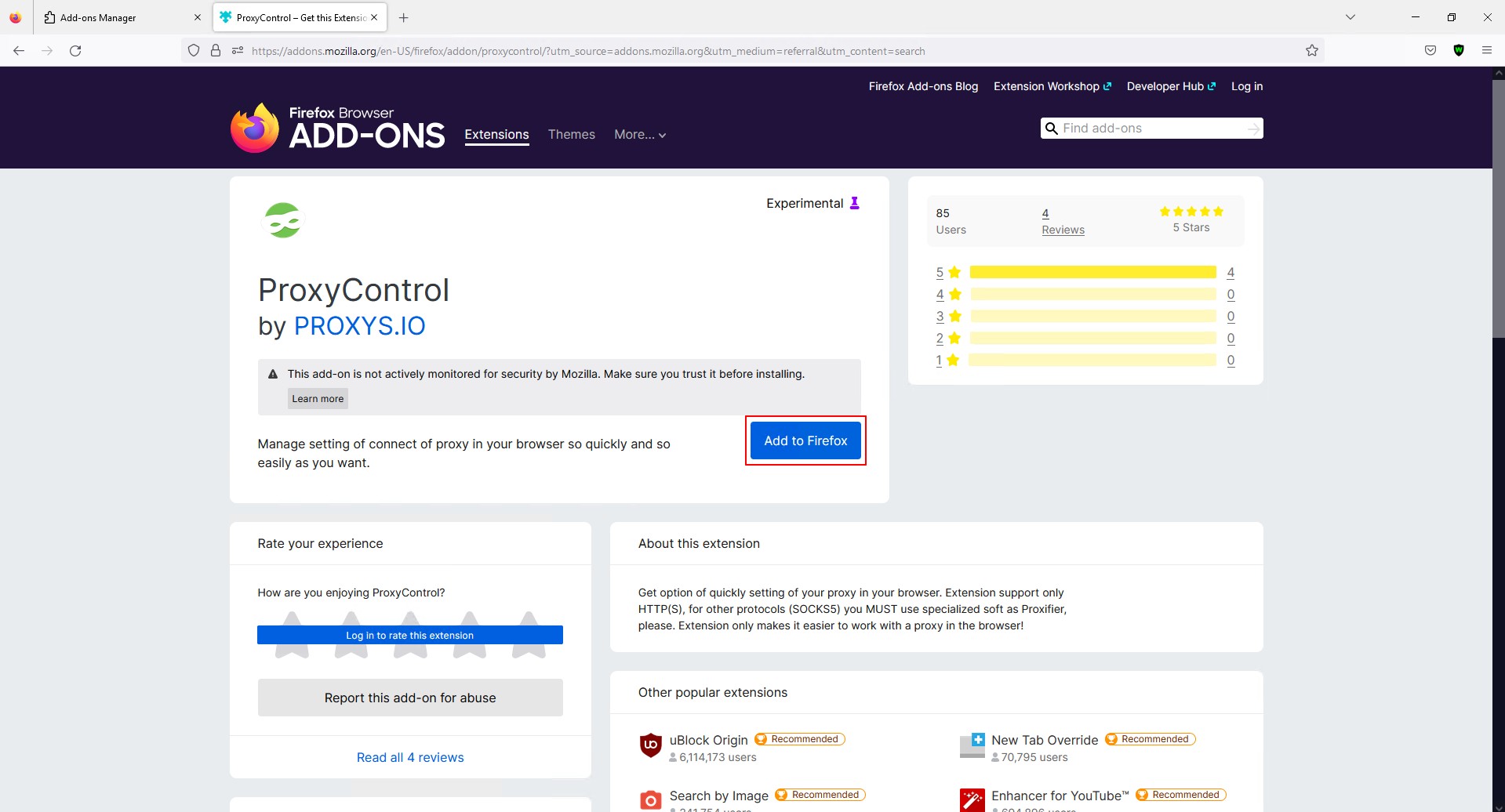
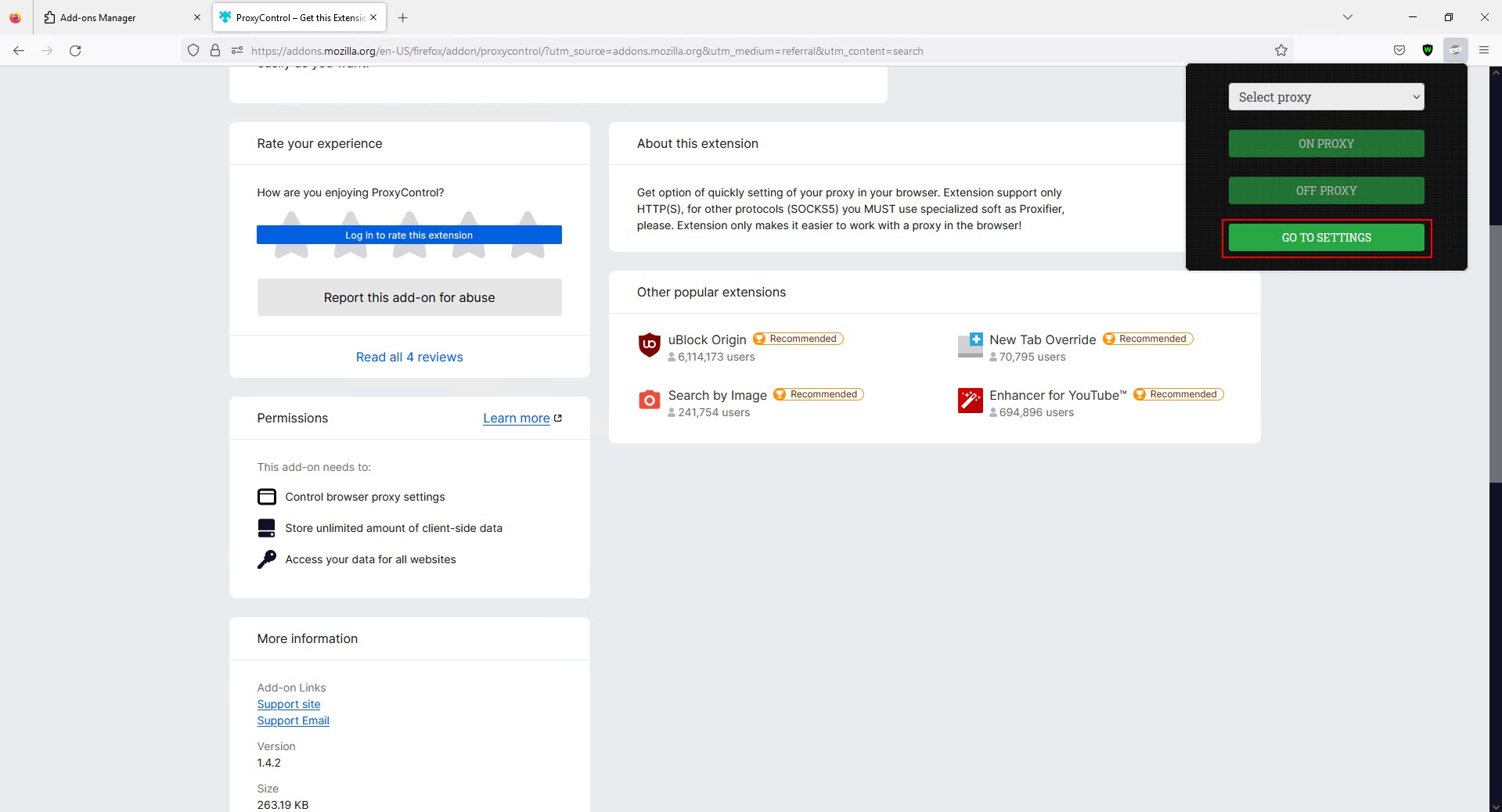
- On the top panel of the browser, click on the extension icon and in the list that opens, click on the "Go to Settings" button.
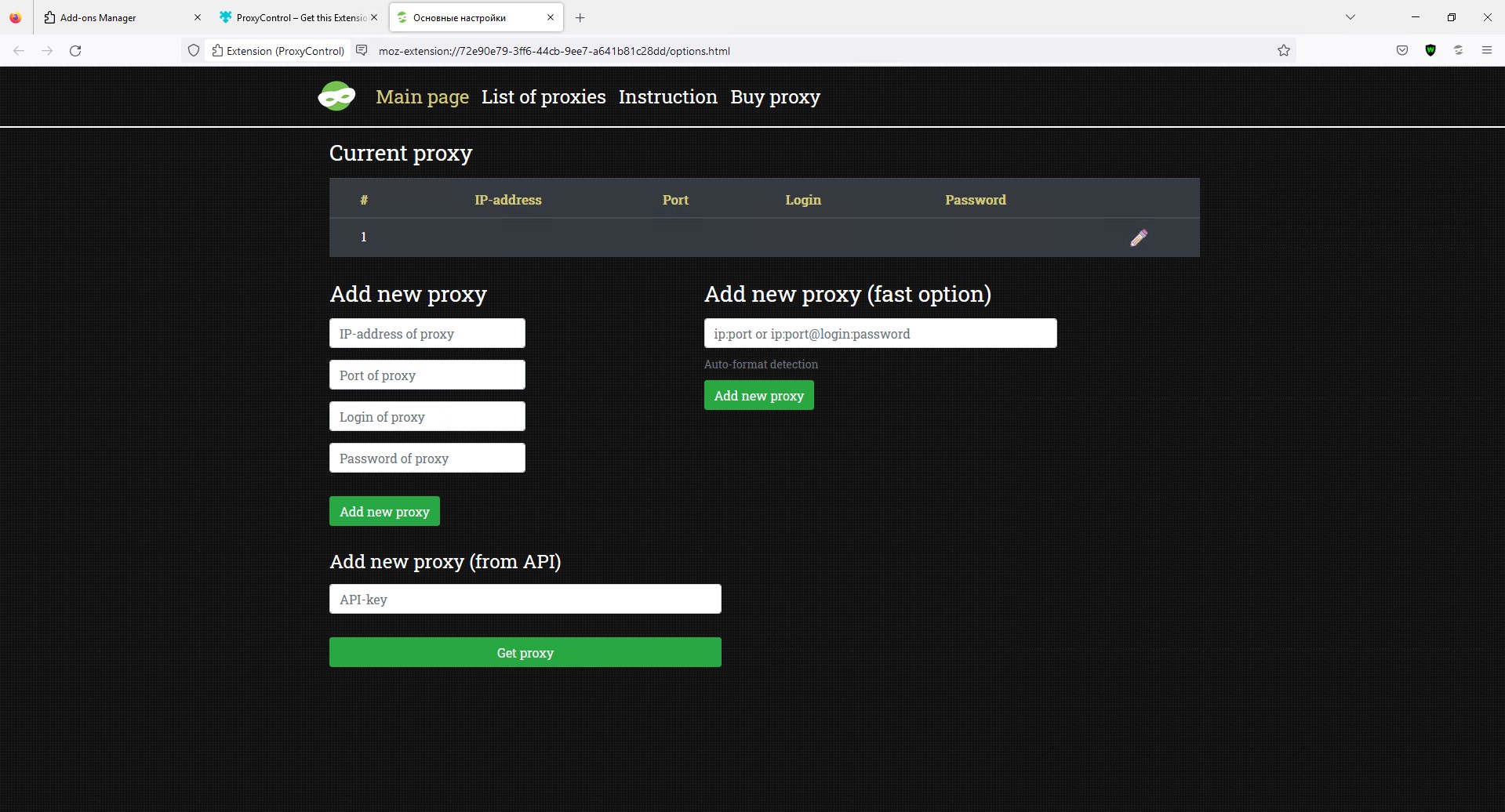
- There are three ways to configure proxies in the ProxyControl extension — standard, fast and automatic. With a standard connection, you need to enter the IP address, port, login and password of the proxy in the appropriate fields and click "Add a new proxy". With a quick setup, the same data is recorded in a single line in the format "IP address:port number" or "IP address:port number@login:password". For automatic configuration, you will need a special API key, which you can take in your personal account. By inserting such a key, you can connect one or more proxies. At the same time, you can select a proxy from the list manually or automatically load all proxy servers.
Proxy for Mozilla Firefox
You can purchase anonymous proxies on our website. We provide high-quality anonymous proxies in one hand. Every PROXYS.IO proxy type works over HTTP, HTTPS and SOCKS, dedicated IPv4 starts at $1.47 per month in 24 countries, and access can be tied to your IP address instead of a login and password. We also provide users with access to round-the-clock technical support, which will answer your questions and help you choose suitable proxy servers.